


Skip to content
Proto Partners
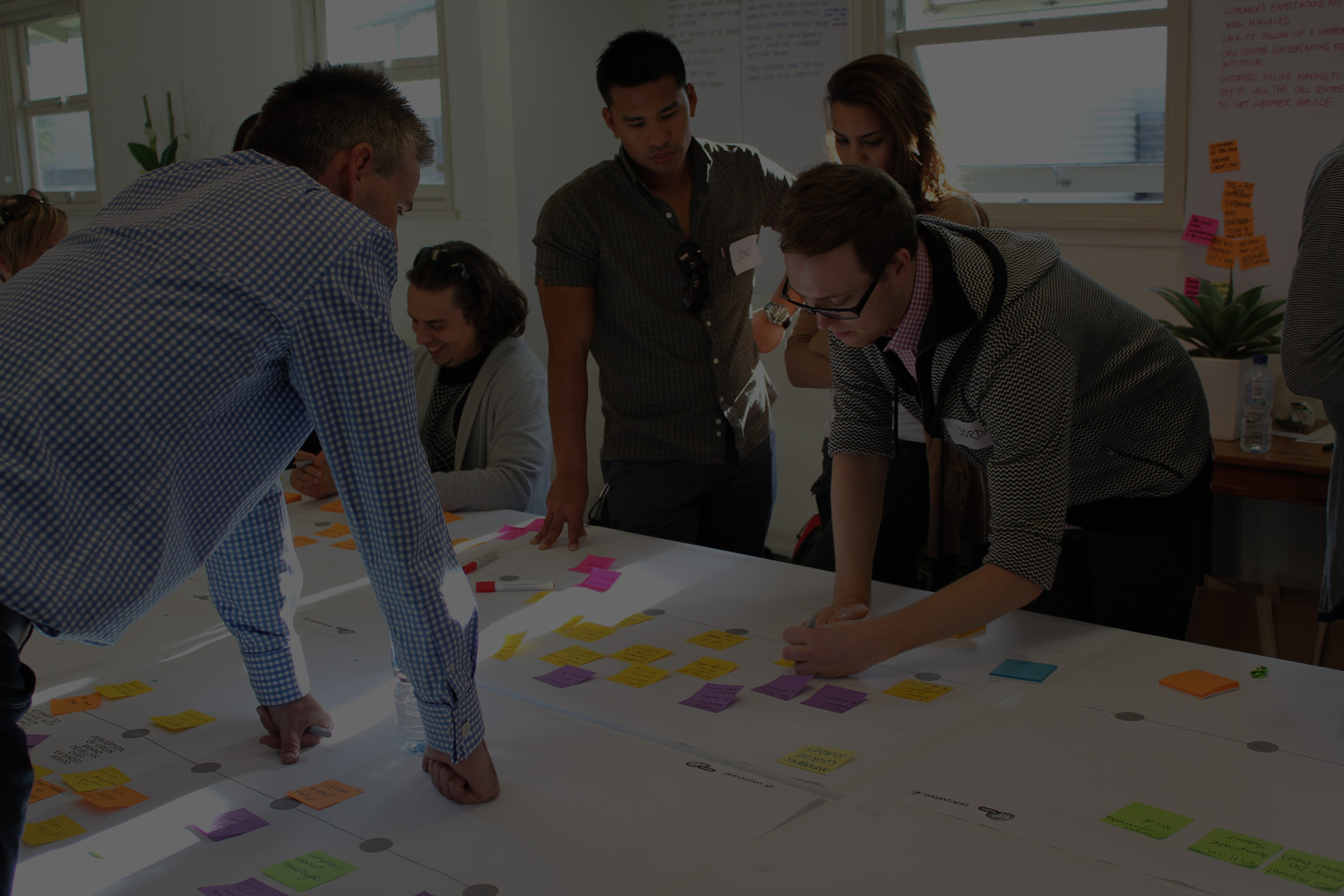
Workshop session for customer experience planning

Our Approach

Proto help you grow revenue and minimise wasted investment by identifying what matters most to your customers and successfully acting on it.

When you know more, you can achieve more

Set your business up for sustained growth by identifying the most promising opportunities, developing clear, actionable plans and achieve new levels of growth.

Discovery establishes customer needs and the problem to solve. Design turns that evidence into workable options and tests them. Support/Success helps teams plan delivery, build capability and review adoption where included in scope. The stages provide a guide, not an identical process or fixed package for every engagement; research and testing may lead teams back to an earlier decision.

01 / 03

Discovery

Clearly define your biggest obstacle to growing with less effort and costs.

In order for you and your team to be inspired to drive positive change, they need to understand what problem they are solving and why it matters. By using a Structured Customer Understanding methodology you get to really understand both your customer and business needs. In far greater detail than you ever have before, it provides absolute clarity on the value case for bringing about change.

The activities and approaches that drive improvements:

  • Define the vision and strategy for the target experience and the principles of success.
  • Discover what customers value using qualitative design research and draw inspiration from leaders in other sectors.
  • Develop insights to build empathy for and assist you to prioritise what's most important for those you are designing for.
  • Design target journeys and imagine new solutions to realise the desired customer experience.
  • Develop a value case that reassures decision makers about the rationale for investment and change.
Evidence collected
Existing customer feedback and operational evidence, qualitative interviews, field observation and relevant survey or diary research establish what customers need and where the current experience falls short.
Client involvement
Leaders frame the business question; customers share lived experience; employees and subject-matter experts explain how the service works in practice.
Decisions supported
Define the problem worth solving, distinguish assumptions from evidence and decide which customer opportunities warrant further design or investment.
Outputs
Customer needs and insights, current-journey evidence, experience principles and opportunity areas, depending on the question and agreed scope.

Validation in practice

Sydney Metro tested information assumptions through research groups across five passenger segments. This is validation of design evidence, not proof of later railway performance.

Read the Sydney Metro project evidence

02 / 03

Design

Feel in control of every decision you make, knowing it is the right one, because you've tested it with your staff, your customers and your market.

Having control and clear sight of what is required to deliver the target experience is key. What do you and your people need to know and do? How do all the initiatives interrelate to ensure you move from ideas to actions? Having the answers ensures you can implement the changes required. You understand the roles, requirements, resources and partnerships needed to be established. You know how to design the operational requirements and implementation roadmaps. And you have the confidence that every delivery team understands their role in implementing improvements.

The activities and approaches that drive improvements:

  • Identify the enablers required to achieve the desired outcomes for customers and the business.
  • Design in detail the priority service experiences that will deliver the most value.
  • Define the new roles and behaviours needed to support new ways of working and develop training to support execution.
  • Co-create the operational design - how will we actually deliver the services and products.
  • Execute the priority initiatives in a way that focuses energy and sequences the projects to drive maximum success.
Evidence collected
Customer needs and journey findings are combined with staff knowledge, service constraints and feedback on proposed concepts and prototypes.
Client involvement
Customer-facing teams and operational owners co-create options. Customers and staff test proposed experiences so desirability and delivery feasibility can be considered together.
Decisions supported
Choose the service changes to pursue, identify dependencies and specify how people, processes, policies and systems support the intended experience.
Outputs
Future-state journeys, service concepts, prototypes, operational designs, roles, staff tools and sequenced implementation plans as required by the brief.

Validation in practice

Hoot Holidays’ redesigned sales process was validated with leading agents before being tested with real clients. The case shows how scripts and service tools translate principles into practice.

Read the Hoot Holidays project evidence

03 / 03

Support/Success

Create a plan that has the agreement and buy-in of your whole leadership team and one your people are inspired to deliver.

Drive business growth and achieve faster results with less effort through increased commitment and confidence. Once the direction is clear, it’s time to take action. Together we create a plan having prioritised, organised and set you and your team up to deliver ensuring your growth opportunities are realised - sooner rather than later.

The activities and approaches that drive improvements:

  • Engage stakeholders in co-developing the change plans, roles and responsibilities to realise delivery.
  • Trial training resources and toolkits to prototype the right methods and resources.
  • Assess the CX maturity across the business and identify objectives and areas of opportunity.
  • Codify the end-to end process to integrate ways of working for new and existing employees.
  • Scale the adoption of the right structure and governance to drive growth as a service.
Evidence collected
Implementation status, staff feedback and adoption evidence inform refinement; customer and operational outcomes need their own baseline and reporting window.
Client involvement
Leadership and internal owners agree roles and priorities. Frontline teams trial tools and training; continuing Proto support depends on the agreed scope.
Decisions supported
Sequence delivery, establish responsibility, address adoption barriers and decide what to refine as evidence arrives.
Outputs
Owned change plans, training resources, toolkits and governance or review arrangements where these form part of the engagement.

Validation in practice

Gumtree reports implementing 50% of 45 recommendations within nine months and scheduling the rest in an 18-month rollout. This measures client adoption, not the satisfaction or abandonment percentages in its graphics.

Read the Gumtree project evidence

From an agreed design to assessed outcomes

A tested concept, an approved recommendation and an implemented change are different milestones. Agree who owns delivery and review adoption separately from customer and operational outcomes. Where outcome measurement is in scope, establish the relevant baseline, population, measure and reporting period; wider revenue or profit changes should not be attributed to Proto alone without supporting evidence.

The published Hoot Holidays story includes examples of the ideal email template, call scorecard and itinerary framework. These show how research becomes tangible staff tools, rather than a new sample invented for this page.

See the Hoot Holidays service tools

Get in Touch

Empower your customer experience journey

Get in touch