
Customer experience (CX) assessments
A CX assessment diagnoses your organisation’s ability to understand, design, deliver and improve customer experiences. Proto examines six capabilities to identify strengths, gaps and practical priorities before you commit to the next investment.
Which service answers your question?
- CX strategy
- How do we decide which customer improvements to invest in?
Connect customer evidence to business goals, choose the priorities and agree the investment, ownership and measures needed to deliver them.
- Customer journey mapping
- Where do customers encounter friction, and what should we change?
Understand the end-to-end experience from the customer’s perspective, reveal moments of truth and identify evidence-backed improvements.
- Service design
- How do we redesign the processes supporting customer experiences?
Translate customer needs into workable services by redesigning the people, policies, processes, systems and handoffs behind the experience.
- CX assessment
- How capable are we of delivering the customer experience we intend, and what needs to improve?
Diagnose the organisation’s CX maturity, evidence gaps and delivery capabilities before deciding where further research, strategy or design is needed.
How capable are we of delivering the experience we intend?
A customer experience assessment gives leaders an evidence-led view of CX maturity: what is working, what is missing and what prevents consistent delivery. It suits organisations with siloed initiatives, unused feedback, unclear accountability or a strategy that has not translated into frontline practice.
The assessment diagnoses capability before prescribing a solution. It helps determine whether the next step is deeper customer research, an investment strategy, a journey-specific redesign or stronger organisational adoption.
The six capabilities we examine
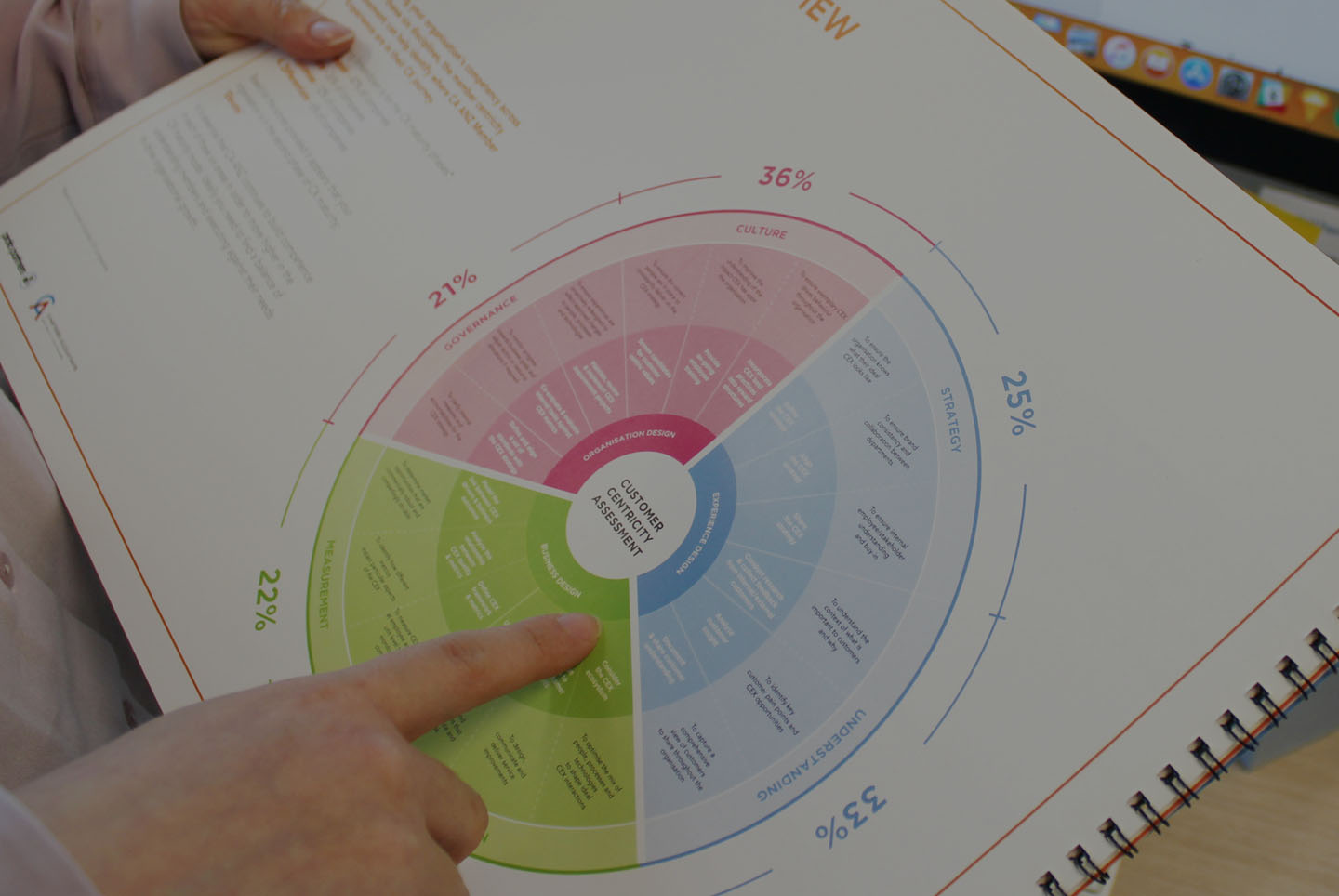
Proto’s customer-centric organisation framework provides six complementary dimensions:
- Voice of the customer: How customer and employee feedback is collected, analysed and used to reveal needs, pain points and opportunities—not just reported as a score.
- Experience design and improvement: Whether teams use evidence, journey mapping, prototyping and a repeatable design process to resolve gaps across people, process and technology.
- Customer experience strategy: Whether the intended experience is linked to business goals, brand values, resources and investment priorities.
- Customer-centric culture: Whether leadership, employee behaviours, training and communication help people act on customer needs.
- Organisational adoption and accountability: Whether executive sponsors and frontline teams own improvements, work across silos and review progress.
- Metrics, measurement and ROI: Whether customer, operational and commercial measures have usable baselines and support decisions about business value.
We examine how these capabilities work together. A strong feedback program cannot compensate for unclear ownership; a vision cannot improve delivery if staff lack the tools or authority to act.

Understand your CX capability
Agree an evidence-led diagnosis and the capabilities to improve next.
GET IN TOUCHFrom evidence review to practical next steps
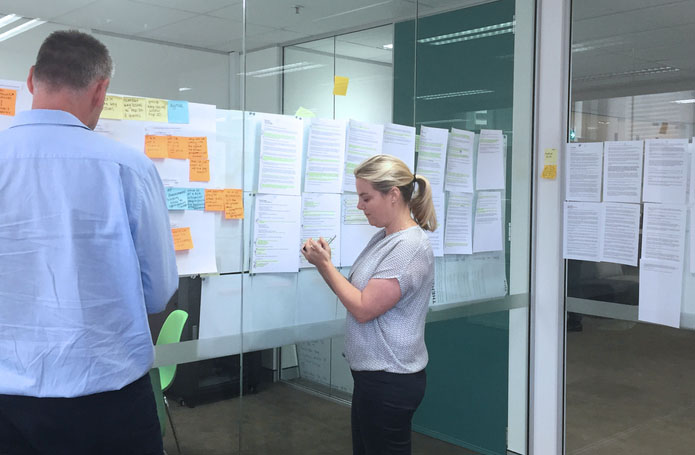
We agree the business units, evidence and decisions the assessment must cover. Existing strategies, feedback, maps, performance measures and improvement plans are reviewed alongside leadership and employee input to distinguish documented intentions from actual practice.
The output can include a capability scorecard, strengths, gaps and prioritised actions with owners and review measures. Evidence gaps are made explicit. Any external benchmark must have a suitable identified source; the assessment is not an independent certification or an automatic industry ranking.
The Customer-Led Transformation Model provides five reference phases: build the foundation, get the basics right, deliver on the promise, differentiate and best in class. They help identify proportionate next steps, not a rigid timetable. Different teams or capabilities can be at different stages.
Timing and fees depend on organisational coverage, evidence access, stakeholder participation and validation depth. Further research, a full strategy, technology selection and implementation are separate scope decisions.
Assessment evidence and implementation readiness
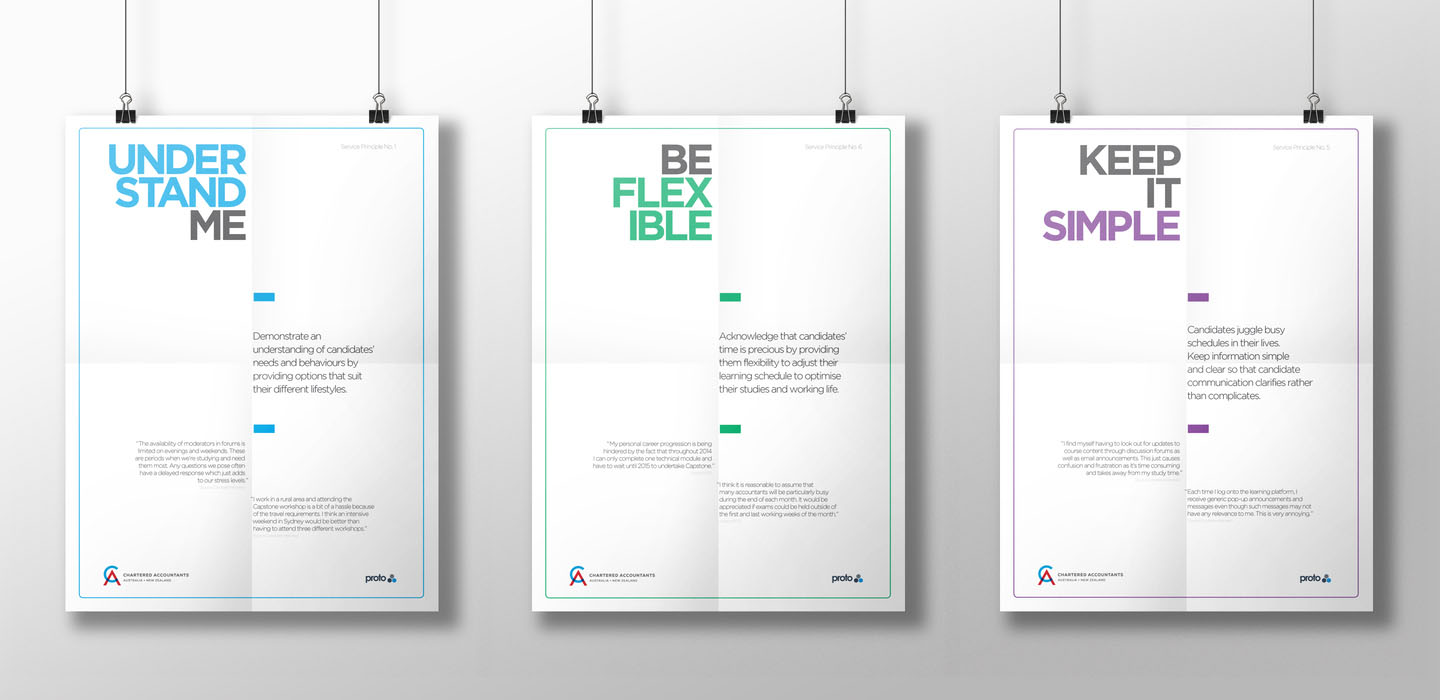
Chartered Accountants Australia and New Zealand sought to understand the candidate and member journey. Proto’s outside-in work considered candidate and employer perspectives, channels, friction, insights and prioritised opportunities. It illustrates how journey evidence can inform organisational decisions; it is not presented as proof of a certified maturity score or measured performance uplift.
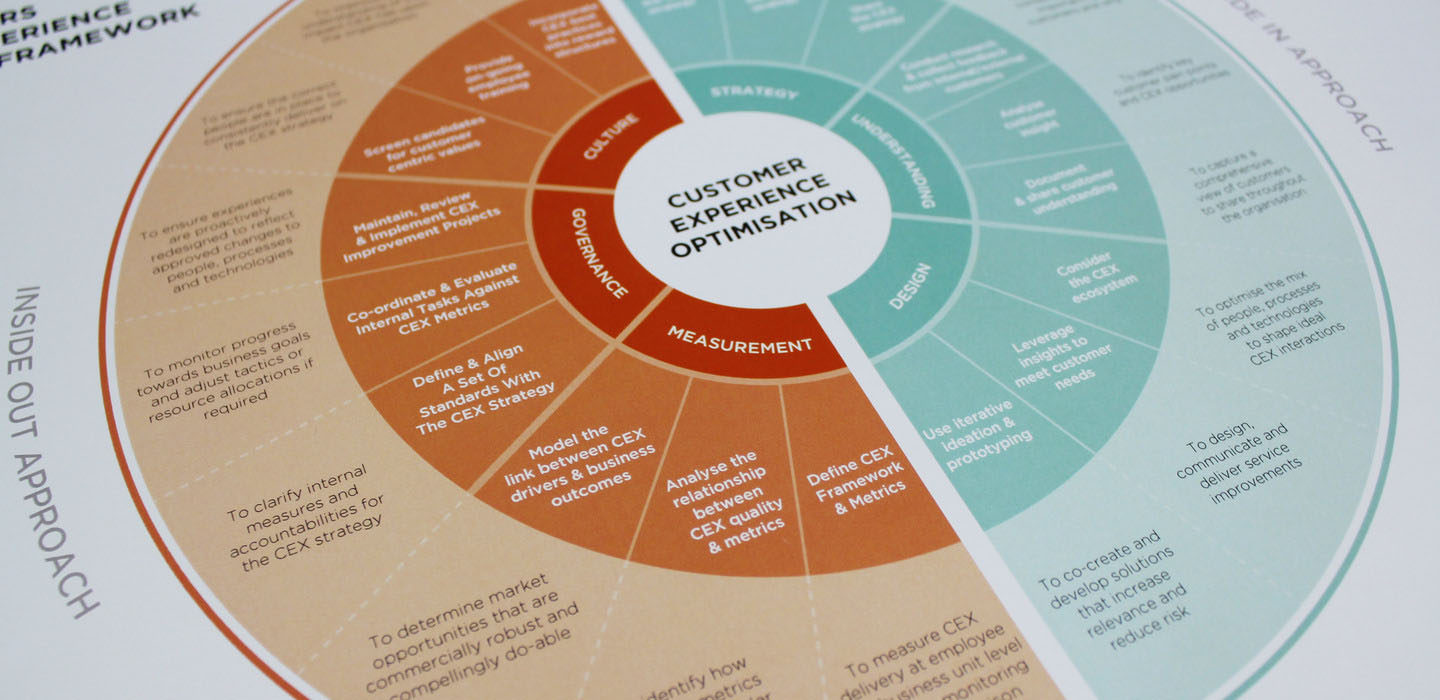
Review capability progress against an agreed baseline and track whether actions are owned and adopted. Customer and operational outcomes require their own measures and reporting periods. The capability framework links customer feedback, design practice, strategy, culture, accountability and ROI so that improvement can continue beyond the diagnosis.
CX strategy turns priorities into investment choices; journey mapping investigates friction in a specific experience; service design develops the delivery changes.
Understand your CX capability
Agree an evidence-led diagnosis and the capabilities to improve next.
GET IN TOUCHFrequently asked questions
- What is a CX assessment?
- A CX assessment diagnoses how capable an organisation is of delivering its intended customer experience. It examines evidence, strategy, design practices, culture, accountability and measurement, identifies gaps and helps leaders agree the next capability improvements. It is a starting diagnosis, not a complete CX strategy or service redesign.
- What does Proto assess?
- Proto’s six-capability framework covers voice of the customer, experience design and improvement, customer experience strategy, customer-centric culture, organisational adoption and accountability, and metrics, measurement and ROI. Evidence is considered across leadership and frontline practice so a policy on paper is not confused with consistent adoption.
- How is a CX assessment different from journey mapping?
- Journey mapping examines a particular experience from the customer’s perspective. A CX assessment examines the organisation’s capability to understand, design, deliver and improve experiences. Journey evidence can inform the assessment, but an organisational maturity diagnosis is not a substitute for researching a customer journey.
- What evidence do we need for a CX assessment?
- Useful inputs include the business and CX strategies, existing customer research and feedback, journey maps, operational measures, governance, improvement plans and staff training materials. Leadership and employee discussions help test how these are used in practice. Gaps in evidence are identified explicitly; further customer research is scoped separately when needed.
- What will we receive from a CX assessment?
- Agreed outputs can include an evidence-backed capability assessment or scorecard, strengths and gaps, a shared maturity picture and prioritised actions with ownership and measures. The assessment identifies where further research, strategy, service design or capability building is required. It does not automatically include implementation or a technology specification.
- Is a CX assessment a benchmark or certification?
- Proto’s frameworks support a structured diagnosis and discussion of maturity. An assessment is not presented as an independent certification or a statistically representative industry ranking. Any external comparison needs an identified, suitable evidence source; internal progress can be reviewed against an agreed baseline.
- How do you use the customer-led transformation model?
- The model describes five phases: build the foundation, get the basics right, deliver on the promise, differentiate and best in class. It helps teams discuss the next practical capability improvements. Different areas may be at different stages; the phases are not a fixed timetable or a guarantee of growth.
- What affects CX assessment scope, timing and fees?
- Scope depends on the business units, locations and stakeholder groups involved, access to evidence and the depth of validation required. Proto agrees the diagnosis, outputs and responsibilities before providing a proposal. Subsequent customer research, strategy, design and rollout are agreed separately rather than assumed to be included.
 Felicity Clark